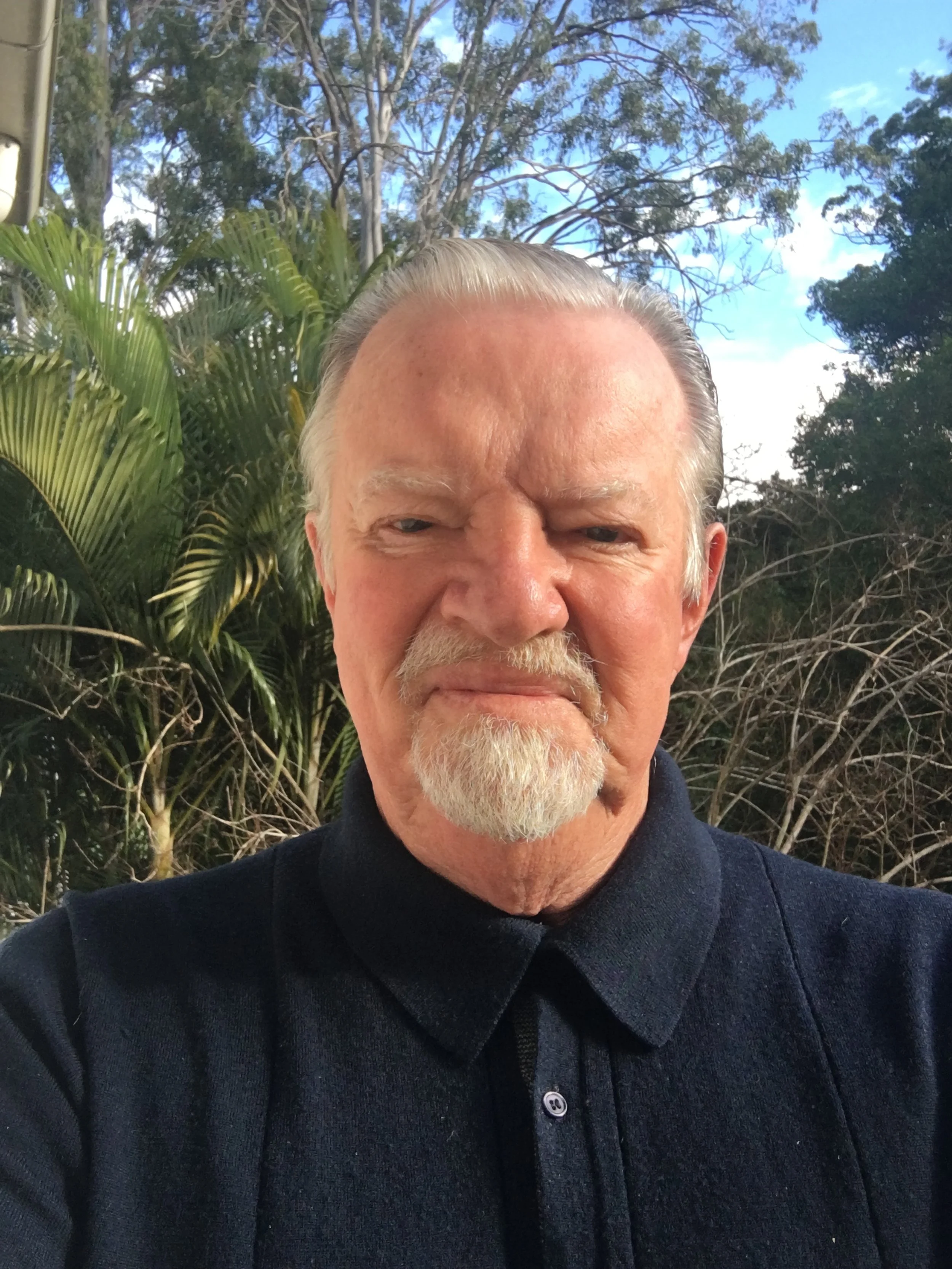
Prue Lewarne
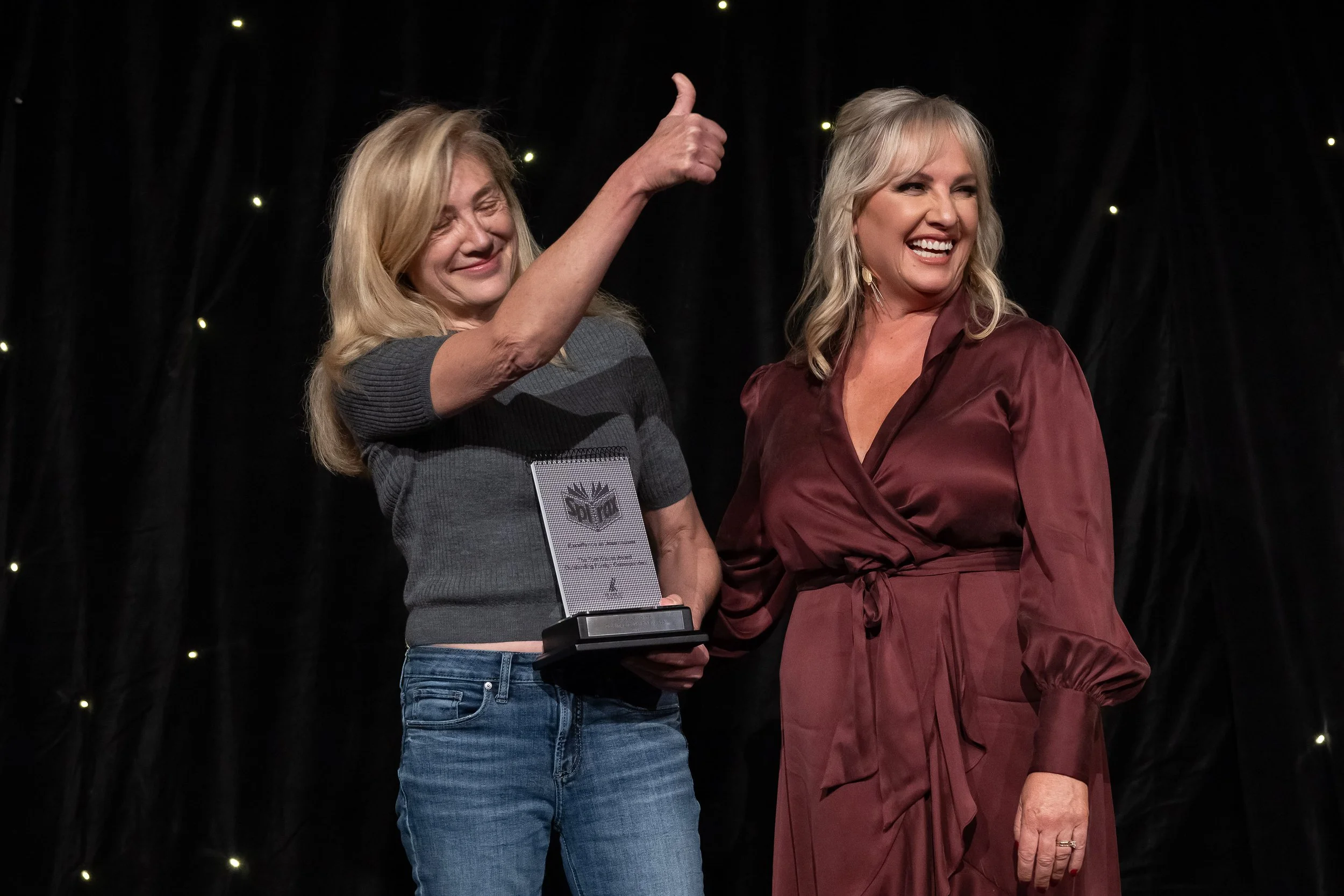
2025 Kennedy Award Winner for Outstanding Foreign Correspondent
Photo Credit: Salty Dingo
Award nights invariably have some surprises and the 2025 Kennedys were no exception. Take the exotic category of Foreign Correspondent. You’d think the legacy media would have the category sewn up, but no, the award went to a freelancer, Prue Lewarne. Eccentric, foolish even, but Prue Lewarne went to some of the most dangerous places in the world and not only survived but has given us an extraordinary body of work driven by the standards of great journalism, idealism, curiosity and asking the why with incredible tenacity and perseverance
Prue: I’ve always had this deep longing to be a foreign correspondent. I'm not really a beat reporter. I don't like being told what to do. That means that I go off and do things myself and that’s what happened. I was the extremely ripe old age of 59, when other people were apparently thinking of going surfing, I thought, well, this is ridiculous, I am going to burst out of my skin if I don't do what I want to do. So back in 2022, I took myself to Somalia as I thought to myself, I have to go somewhere where no one else is going. Nevertheless, something big IS happening.
I think I know what the stories are. What drives me is when I look at a situation and go- How could that be?That's why I did both Mexico and Haiti, because if you'd seen it, before Trump got in, you would see these caravans, that's what they were called, of migrants going up through Mexico. These people are clearly not stupid, they're intelligent people and yet you knew that none of these people were going to make it. Yet the caravan might be thousands of people- how could that be?
What about going to Haiti?
Prue: I had seen in the newsroom at SBS video feeds of what looked like crazy people in Haiti protesting. People aren't crazy, but they were. You would get a 2-minute feed of people holding machetes; they look crazed and again I thought - how can that be? There was a commonality between Mexico and Haiti, which was that with both groups of people, there was a kind of implication that they were out of control, that they weren't thinking properly- that kind of interests me.
Still, how do you manage to do this? The travel and hiring crews cost a lot of money.
Prue: The whole economic model doesn't work? There’s zero certainty but I don't really care about that. In Mexico I hired 2 cameramen and I yet had no idea what was going to happen, whether I would even find migrants.
I thought I'll do this for 7 days but after 7 days they hadn't made it to the border so I had to keep going. Eventually someone jumped over the fence after 12 days.
Having no plans, no backers, no money sounds a bit crazy?
Prue: The bottom line is I have this split world where I freelance as a casual producer at SBS and have for a long time. That's kind of like my pin money, if you like; I go off and do what I love. It may or may not pay the bills but if I didn't do it I would explode. It’s not that it necessarily makes me money; the imperative is that I do something that is world-class.
I do stuff that interests me because I actually want to find out the answer. I just stick with it until I have the narrative arc. I'm worried all the time. It's a crazy situation but it's the best thing in the world. I love it!
Beyond the talent and skills that earned you this award, what is it about you that puts your interviewees so at ease?
Prue: Oh thanks, but do I have this other advantage -if you're my age and female then you're probably invisible. You'll certainly be discounted; that is just the most extraordinary advantage. I can sit down to interview someone and they think that this is going to be, I don't know, inconsequential, a breeze.
Does this mean the interview subjects lower their guard?
Prue: That’s exactly what happened in the Congo when I was interviewing the M23 leaders. They actually spoke their minds which made the film far more revealing and interesting and attracted a lot of interest.
The same thing happened in Nicaragua. They probably thought that I was a Pilates yoga person on holidays. They literally can't see you when you're female and my age it's great!
Tell us what it's like being in Haiti, witnessing terrible things, being in dangerous environments, and interviewing unpredictable, often violent, dangerous people.
Prue: Yes, it's an out-of-body experience to tell you the truth. It's as if I'm not doing it. But every time I go to Haiti and I’ve been four times, kidnapping is a really big deal. I've been told how much they would ask for me by the top negotiator in Haiti. He would say even though I was a freelancer, they'd look at you online and they'd go starting price $2 to $5 million US.
Yet you keep going back. Was there ever a close call?
Prue: I went twice into gang-held territory to interview two gang leaders and we were stopped by some local hoods. They were clearly just trying to get a bit of money from us. It would have been minimal; it would have been $50, but they all have weapons. Everything was quiet and I actually thought of Beirut. There were five guys; they were kind of like cats. They had arranged themselves at their little “fake” checkpoint. I looked across at a vacant building and I thought, yes, this is where it happens, this is how it happens.
How do you deal with the stress?
Prue: I'm cool as a cucumber.
What do you put that down to?
Prue: Well there are moments when it's an out-of-body experience. But we're journalists so what is stressful in the situation is thinking, I don't have the story yet. I don't have it, and I've got to get it. In the case of Haiti, we only had seven days because we had a chopper ride out and we HAD to be on that chopper.
In the case of the train, we were stopped by Mexican immigration authorities, backed up by the army and in that situation you just calmly stand your ground. I wasn't getting off the train. What's stressful, as you would know, is I don't have the story yet as someone has to make it to the border.
While I understand about not having this story, in those moments, in those situations, you're also responsible for the team.
Prue: Exactly!. But the most important thing isn't actually the team in the moment;The most important thing is the continuing safety of the local fixers after you've left- especially with a dictatorial regime in place, such as Nicaragua. I am absolutely meticulous about that because if I put out a story that annoys people, then they're the ones who are still there. The most important thing, for example, is I meticulously go through the footage to make sure that the fixer isn’t in a frame or accidentally in a shot, all that sort of stuff, just being a hawk.
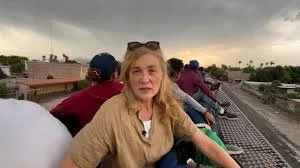
To be fair, everyone takes on a risk; you wouldn't believe what it's like sleeping on top of La Bestia , described as the Train of Death. You just would not believe it, it was the most insane situation. We had climbing ropes that were bolted onto the train so if I rolled over I would still be bolted to the top of the train.
Prue: When I was in Haiti on the last day of filming, I absolutely had to get up to where they were shooting. I organised a local to drive me up on the back of a motorbike. I didn't take up my cameraman until I felt it was safe. I just filmed it myself. Everyone assumes a risk but I'm responsible for everyone. The funny thing was that when I brought the footage back here someone said to me that there may be an issue with the footage because we weren't wearing helmets!
There was another situation where my little team was taken at gunpoint -It was a big deal! It was the only time I wasn’t with my cameraman, a trusted colleague and dear friend, who I’d flown in, as I was back working at the hotel. Suddenly, someone burst into the lobby and gave me thirty minutes to vouch for my cameraman otherwise they'd shoot him.
I said, OK, just give me a second and raced upstairs, grabbed my media card,and then hopped on the back of a motorbike. I did a piece-to-camera to document it, just in case, and headed to their location.
I'm sort of all “good morning, bonjour” and of course, most of it is theatrics. At least it feels that way and you hope it is and they let us go. It could have gone either way. Afterwards I interviewed my cameraman, to take a note of it, to make sure he was ok. Then we got on with the job interviewing survivors of rape. We all wanted to keep working. No question. It was quite a day and we drank ample tequila that night, for sure.
How did all this insanity begin?
Prue: Channel Nine Business Today. I was the producer for Michael Pascoe because I wanted to be on television. It was just so ridiculous. Of course I had no idea how to do that as I'd majored in history at Sydney University. I wrote letters to various people saying “employ me”. Of course no one replied. What happened next was I got a job as a bullion and futures dealer at Macquarie Bank. Hilariously, I did all these psych tests which indicated that I would be a great futures and bullion trader! Obviously, the psych tests were terribly wrong. Macquarie only took on two graduate trainees a year- I was one of them.
Obviously if I stayed with Macquarie Bank, I would not be just the owner of one pair of Birkenstocks and some faded jeans. Anyway, fortuitously, Michael Pascoe from Channel 9 would ring up every morning and I was there because I was the nobody working from midnight till 8:00 AM and he would ask me what the market had done that night.
One day Michael said to me I think our producer is leaving at the end of the year so come and work for us. No money for a week and if you do ok and if she does leave you can have her job! It was classic TV : I'm offering you nothing, you're not going to be paid, but if someone leaves, you might get the job. Nevertheless I quit my job at Macquarie Bank and did the week's trial at Business Today. I hadn’t done economics and didn’t know anything. I had to go back to waitressing until that December when Michael Pascoe called to say I could come and work for them.
You are IN television now but not ON camera.
Prue: The producer job wasn’t going to turn into an on-camera job so after a year I quit. I don't know if you remember, but back in the day there was the thing called the Pink Guide. Jackie Lee Lewis used to put gossip and industry news in it. She wrote a little item about a consumer program on the ABC who were looking for someone, so I contacted them.
I was going to go and visit my sister in South America when they called me in to do a screen test. It was something about a toaster and I thought, well, I don't want to do this. I didn't want to talk about a toaster but I did the screen test.
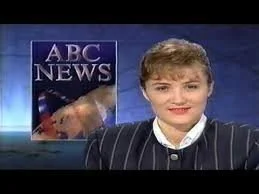
A month later I'm in Peru and up in the Andes and I get a call from my sister. It sounded like she was on the moon saying the ABC News has rung you and they want you to call them, so I called them.
I guess on the basis of that year of being a trader and then a producer at Business Today, ABC News offered me their business and finance correspondent.
What is it that drives you personally?
Prue: When I was a teenager Four Corners used to be repeated on a Sunday at 1:00 PM . I remember the first episode I saw which blew me away. It was about Love Canal - an environmental disaster and a travesty of justice. I remember I grew up on the North Shore playing the piano and going to school. I watched this episode with my mum and dad and it was like WOW! I didn't realise at the time but I think what interests me is equity. Why are those people telling these people how to live? Determining how they live? That's wrong isn't it? Then you go, oh my God, I had no idea. How can I be an educated woman? What is wrong with me?
Every time I come across a new subject I am embarrassed that I know nothing and I call myself a journalist. I try to get up to speed, then hopefully the people I carry along with me will too before I go and do the next thing.
I'm driven by wanting to discover things and WOW there is some crazy shit out there. Maybe when I'm all grown up I'll be an investigative journalist but I don't think so.
How did you feel when your name was called out as the winner at the Kennedy Awards last year?
Prue: It's that out-of-body experience again, isn't it? I'm just thinking - where are the stairs? What do I have to do and where do I have to go? I just keep walking. This is difficult as I'm not wearing my glasses. Just head over there but it was so lovely.
The thing that was really interesting to me about the Kennedy’s was that it felt joyful for two reasons. It was partly because one of the presenters of the evening is just fabulous TV talent.But the main reason why I loved it iis because both public broadcasters and the commercials were represented and therefore it actually felt like Australia.
Receiving a Kennedy was exciting for me because it felt like all of the media was there and you're getting this kind of embrace from colleagues who are from 7 to public broadcasters. I loved being in a room that felt like it was a bit ‘larrikin’- that's Australia. It felt like it was representative of everyone.
And yes, I loved winning. It was a feather in my cap because it was not what I expected -it was lovely.
Given you started in legacy media, how has technology shaped your future?
Prue: The game-changer for me, in answer to your question, is the iPhone. I had a bee in my bonnet about Nicaragua. We shot it on an iPhone out of necessity to evade the agents of the regime and that was the breakthrough because you discover you don't need a pro-camera. Now I did have a cameraman with a proper camera on the train in Mexico but I had another person with an iPhone (an upgraded iPhone) and 80% of the material we used was from that iPhone.
By the time I did the Congo I shot it myself and it's all iPhone footage. Even craft editors look at the footage and go, “What? It's iPhone? It looks great!” Then YouTube as a platform for news and current affairs emerged so I’m always endlessly positive.
The bottom line is I'm a girl with an iPhone and I can go anywhere in the world. You know, as journalists, it's the best possible time.