Ariel Bogle
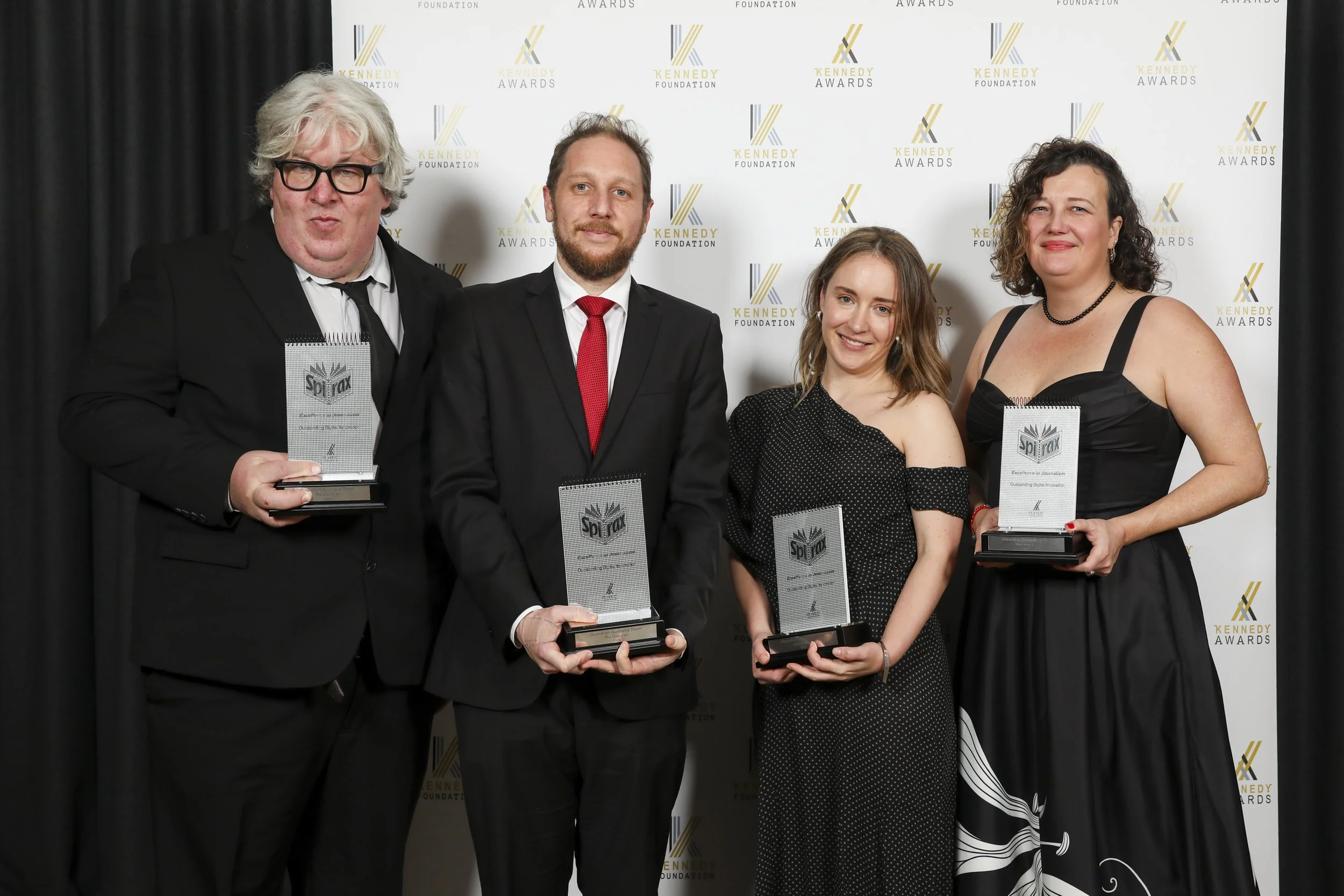
2025 Kennedy Award-winning team entry for Outstanding Digital Innovation.
Ariel is second on the right. Photo Credit- Salty Dingo
New Media is a fast-growing and terrifically varied medium with Podcasts roaring away in popularity. It's an environment that develops a whole new breed of journalists with a whole new set of skills, married to our well-served traditions.
New Media is a medium whose success is more often than not built on teams of talent.
In the 2025 Kennedy Awards the prize for digital innovation went to a team from The Guardian with the entry called ‘Leaving Gaza’. One of that team was Ariel Bogle and if her talent and achievements are any guide the business is not only in safe hands but great ones.
When and where did this shining career all start?
Ariel: After university, I went to the United States where I was working for a book publisher but then decided the pace was a little too slow for me. I was looking around trying to think about how I could get more into journalism and writing. One of my first jobs in the US was this project called Future Tense, which was a collaboration between a think tank in Washington DC and also the website Slate. I started writing about technology, policy and culture.
Why the interest in journalism?
Ariel: I think I came more into journalism from an interest in a topic rather than in journalism. I was always interested in technology at university. I'd done a law degree and as part of that I was really focused on how technology was evolving and changing our understanding of law and culture. I thought that was a really interesting topic to write about and investigate. Once I got my foot in the door the world of journalism opened up to me and I decided that's where I wanted to be.
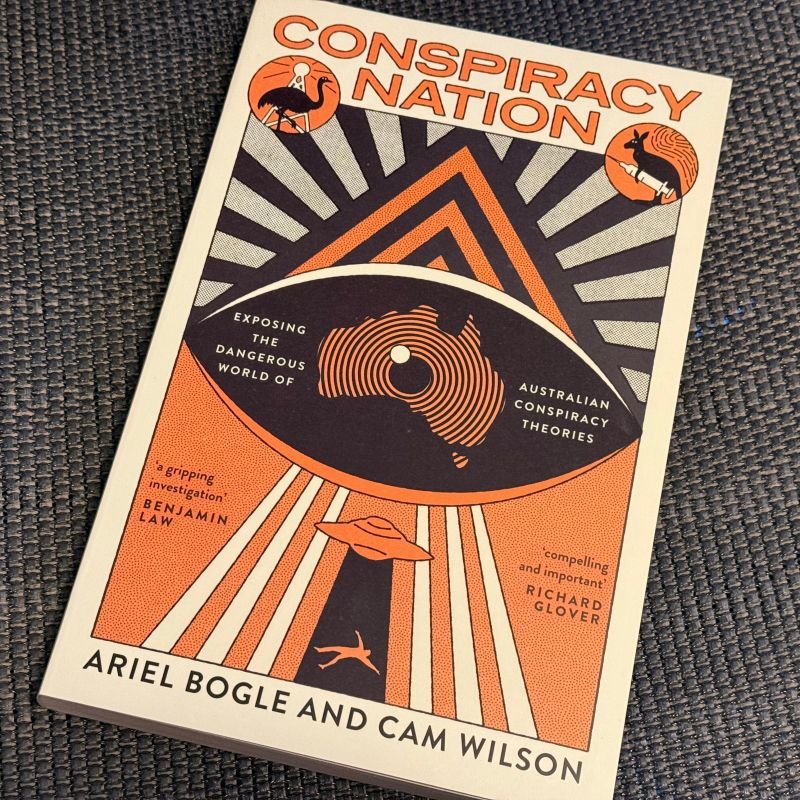
What do you put your success down to? You've been published in The New York Times, The Atlantic and you've written a book as well as winning a number of awards.
Ariel: I've been very lucky to get a lot of really good opportunities. What does it come down to? I guess just maintaining a lot of curiosity about everything and seizing opportunities when they come to you. I think that once I get interested in a topic I really want to take it as far as I can. I read everything I can and talk to everyone I can. That really is the privilege of journalism to me - being able to pick up the phone, walk up to people and,more often than not, they'll talk to you. It’s just such an amazing experience and a privilege to get people's stories and be able to show them to the public in that way.
What's your fascination with technology?
Ariel: I was interested in covering technology at the start of my career because to me it just seemed like it was touching everything and people weren't writing about it in a way that made sense. I felt like technology reporting was really segregated back then into a certain part of the paper or websites, while it seemed very clear to me that technology was the story. Technology and law, technology and health, technology and justice - it all came together. It really shouldn't be siloed in that way anymore.
I suppose at heart what interests me is questions of justice and power. Technology was changing everything we understood about that. I just wanted to be reporting in that space.
How tech-savvy do you need to be?
Ariel: All reporters, no matter what their beat, need some literacy in how the technology that touches their topic works. If you're reporting on healthcare you need to understand how the algorithms that do the risk-rating and insurance work. I think if you're reporting on police you need to understand the technology that police now have access to in terms of surveillance, in terms of identifying targets, in terms of the weaponry they might have access to. Every reporter needs a level of technology literacy and that pursuit of literacy has really driven my career and reporting interests as well.
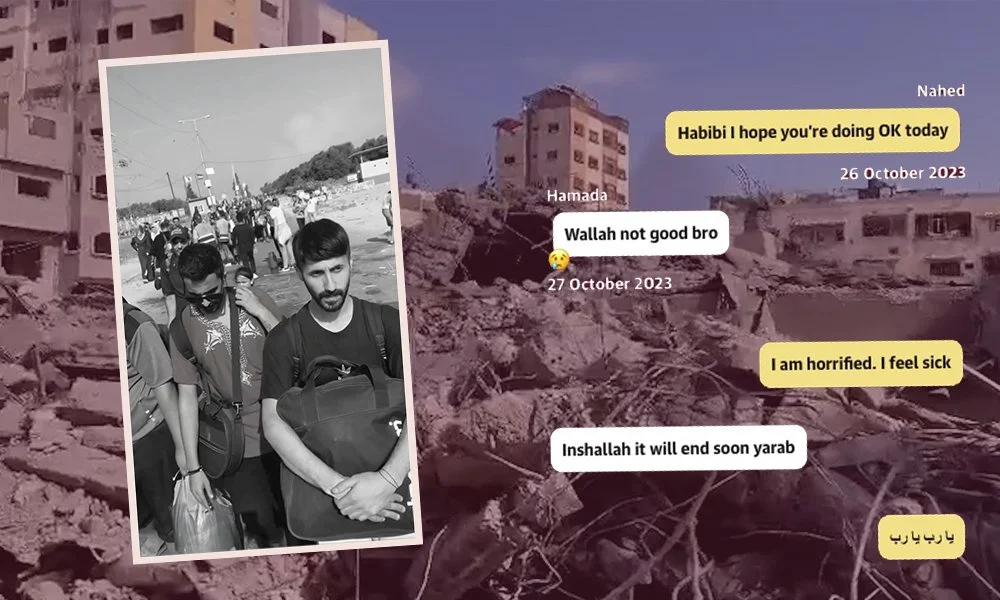
How does technology bear on your winning Kennedy entry ‘Leaving Gaza’?
Ariel: We wanted to be able to tell that story and bring it to Australian audiences in a really immersive way. When I would speak to people who had family in Gaza, in Palestine, they were using platforms like WhatsApp, e-mail and Instagram to share their story but also just to stay in touch. When Rafqa Touma and I started working on this story we thought from the start if we could find someone, who would be open enough to share the kinds of conversations that they were having over these platforms with us, it would be a way to tell the story and really tell it in a touching, immersive way. It's a story with all kinds of themes and that technology thread just allowed us to tell it in a more immersive way than if we'd just done a feature article.
Does the technology side require a team of people?
Ariel: Stories like this require a really big team to get them across the line. The reporters are there of course, talking to the people who feature in the story and bringing in all the who, what, when and where of a story. To do something interactive and immersive like this we had to work very closely with our designers and developers- Nick Evershed and Andy Ball, who are just amazing at this kind of thing, as well as our translators.
In this saturated digital world, how do you stand out and engage an audience?
Ariel: As we know readers have so much stuff bombarded at them now. All our audiences are on multiple platforms and ar consuming all kinds of video and social media. To stand out and engage them you need to experiment and try new things.
The format that we used to tell the story of these two friends (one in Gaza and the other in the United States at that time) and their messages as the war unfolded wasn't a template that The Guardian had used before- it had to be built for us.
It was a new way of telling a story and we hoped that it would provoke or surprise the audience and get them to spend time with it over all the other things they could be doing on their phones at any given time.
When you say it has to be built, what had to be built?
Ariel: I guess the back end – all the nuts and bolts of behind the page in the coding. Most news outlets these days would be familiar with the idea of having a CMS that you drop your story into. Something like this, where it has all these interactive elements and pictures and flowing text, needs to be built by the developers from scratch. We're really grateful to them for that.
How creative does New Media need to be?
Ariel: I don't think every story needs to have all bells and whistles. Sometimes a simple 700 word article can achieve just as much. However, when a story lends itself and you feel like you can achieve something with a new type of format then you really are only limited by what you can imagine and what you and your developer can achieve together.
Is journalism still a viable career?
Ariel: I'm in two minds because on the one hand, I'm still thrilled. I'm forever thrilled by the job and thrilled to do it and amazed by the kind of connectivity that it allows me to have with all kinds of people. On the other hand, there is this sort of steady drumbeat of contraction, of job losses and things like that. Sometimes it's hard to quite see the future but in many ways there's a lot of opportunity too.
What advice would you give to young aspiring journalists?
Ariel: You never know what kind of new jobs might emerge or that you might be able to invent yourself. I do think I've found that having speciality knowledge is really beneficial.
Choosing some beats you can really get across and knowing the space and knowing who to talk to. Having that additional level of literacy is really valuable and allows you to walk into rooms and not be learning from scratch but be able to have the right kind of conversations. If there are beats that interest you then really pursue them and become an expert as far as you can.
What’s your current an ambition?
Ariel: Well working at The Guardian on the investigative team is fantastic. I guess my ambition, just at the moment, is to tell bigger, better stories.
How did you feel when you and your team won your Kennedy Award last year?
Ariel: We were, of course, thrilled by the recognition for our team. However, given the topic and the generosity of the people in our story of Hamada and Nahed, our thoughts were really with them. They were still, as Palestinian people, really dealing with the maelstrom of Israel’s war on Gaza.
The Kennedy Awards are always a really gratifying night and it is also just nice to be in the room with a lot of different people that you might have worked with in the past. Just catching up with everybody, seeing familiar faces and celebrating people's achievements. It's a bit like a big reunion of sorts -it’s always really, really lovely!